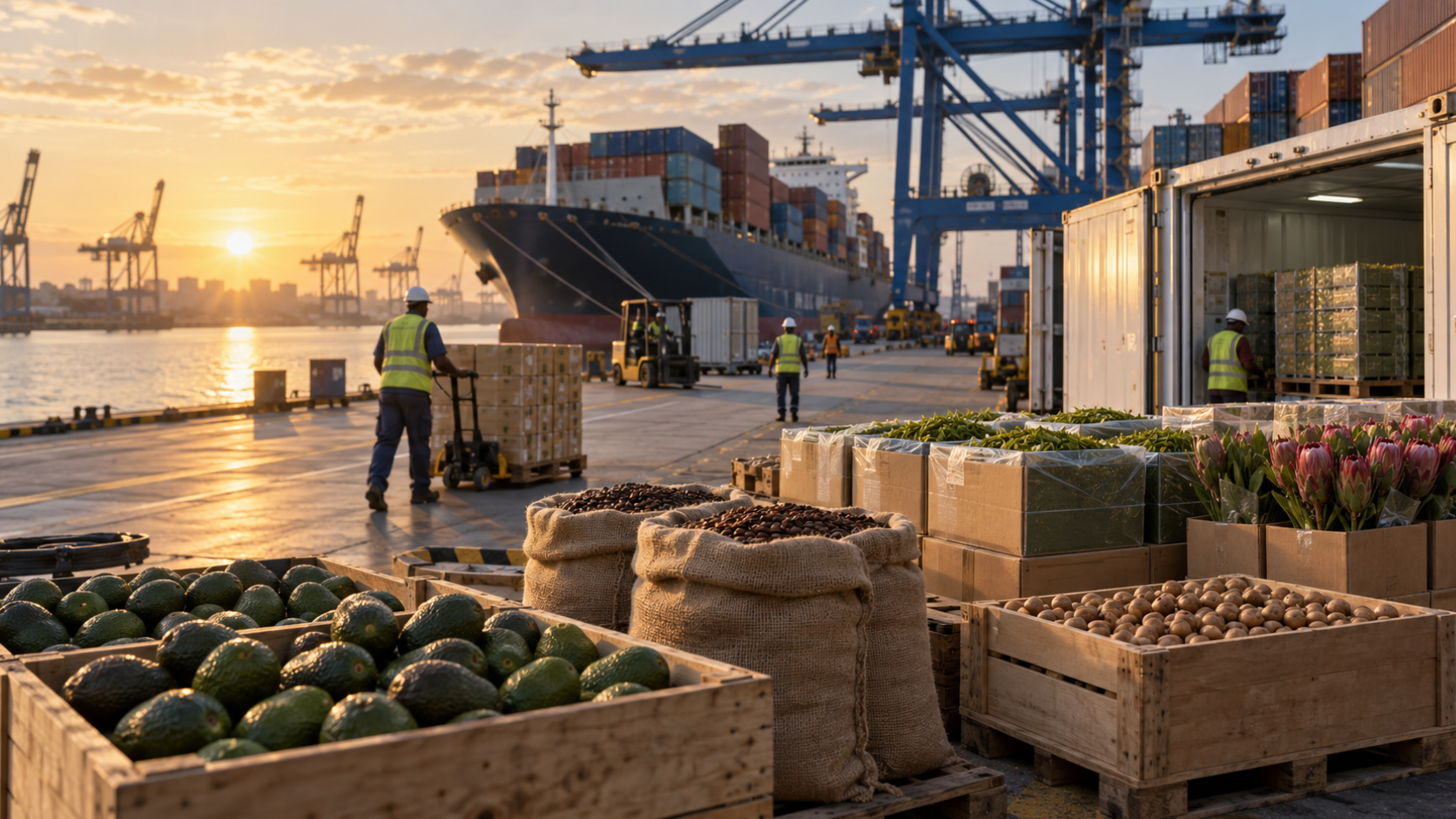
The proposed R21.8 billion acquisition gives Solar Industries more than additional explosives capacity. It provides an established route into African mines, customer relationships, technical expertise and a distribution network that would take years to build.
India’s Solar Industries has agreed to acquire South African chemicals and mining-services group Omnia Holdings in an all-cash transaction valued at R21.8 billion, approximately $1.36 billion when announced.
If completed, the transaction will give Solar control of one of Africa’s most established industrial networks. Omnia operates in more than 20 countries, distributes to over 40 and has more than 70 distribution centres.
That footprint helps explain why Solar is prepared to pay a substantial premium for the company.
The acquisition is structured as a scheme of arrangement under which Omnia shareholders would receive R134.50 for each share. The offer represents a 30.98% premium to Omnia’s closing share price before the initial cautionary announcement and a 35.73% premium to its adjusted 30-day volume-weighted average price.

The transaction remains subject to shareholder, competition and other regulatory approvals. If it becomes effective, Omnia will be delisted from the Johannesburg Stock Exchange and A2X.
The headline is a large cross-border acquisition. The more consequential strategy is that Solar is buying a platform capable of accelerating its expansion across Africa’s mining economy.
Building an African network takes time
Solar Industries is already a substantial international company.
The Indian group manufactures industrial explosives and initiating systems for mining, infrastructure and construction. It also operates a growing defence and aerospace division. Its products are consumed in more than 90 countries, supported by manufacturing facilities across 11 countries.
But selling products into a market is different from operating deeply within its mining industry.
Commercial explosives are not ordinary export goods. Suppliers must navigate national regulations, transport hazardous materials, establish secure manufacturing and storage facilities, deploy equipment at mine sites and provide reliable technical support.
Mining companies also depend on suppliers to deliver consistently in remote locations where an interruption can halt production. Market access therefore depends heavily on local operating capability.
Omnia has spent decades building precisely that capability through BME, its mining division. BME supplies bulk explosives, initiating systems and blasting services to mining and quarrying customers across Africa and other international markets.
Its value lies partly in accumulated execution capacity: people who understand local conditions, licences that permit operations, manufacturing facilities near customers and long-standing relationships with mine operators.
Solar is effectively buying time.
Omnia is a functioning industrial platform
Omnia is not being acquired as a struggling company requiring rescue.
For the financial year ended March 2026, the group generated R24.2 billion in revenue, up 6.1% from the previous year. Operating profit increased by 27.8% to R2.17 billion, while the operating margin improved from 7.4% to 9%.
The company also ended the year with a net cash position of R1.68 billion.
Its two largest businesses are already substantial:
- Agriculture generated R13.05 billion in revenue and R1.25 billion in operating profit.
- Mining generated R9.82 billion in revenue and R1.15 billion in operating profit.
- The smaller chemicals division generated R1.33 billion in revenue.
Mining accounts for approximately 41% of group revenue but nearly half of the operating profit generated by Omnia’s three operating segments. Its 11.7% operating margin was also higher than agriculture’s 9.6%.

For Solar, the acquisition therefore provides an established and profitable mining-services platform rather than only the possibility of building one in the future.
The transaction is about scale and integration
Solar and Omnia operate in overlapping parts of the explosives value chain.
Solar brings manufacturing scale, research and development capabilities and a broad international presence. Omnia contributes established brands, African operating depth and technical mining services through BME.
Combining the two could create a more vertically integrated business capable of manufacturing explosives and initiating systems, delivering them to mines and providing the technical expertise required to use them effectively.
Solar expects the expanded footprint to increase its African mining revenue several times over from the 2028 financial year.
That expectation reveals the strategic logic of the transaction.
The company is not paying R21.8 billion merely to absorb Omnia’s existing earnings. It expects to use Omnia’s network to sell more products and services across markets where it would otherwise face a slower, more expensive and less certain route to scale.
This is the difference between acquiring revenue and acquiring distribution.
Revenue reflects what Omnia sells today. Its operating network creates the possibility of what the combined company could sell tomorrow.
Africa’s mining opportunity is becoming more strategic
The timing also matters.
Rising investment in copper, lithium, cobalt, graphite and other minerals associated with electrification and energy infrastructure is increasing the strategic importance of African mining markets. Governments across the continent are also seeking more investment in exploration, production and local processing.
Greater mineral production creates demand not only for mines, but also for the industrial services surrounding them: explosives, drilling, processing technology, logistics and specialized technical support.
Omnia’s mining business is not limited to critical minerals. It serves a broader range of mining and quarrying customers. However, increased investment in energy-transition minerals adds another source of long-term demand for its services.
Foreign companies seeking exposure to this opportunity face a choice. They can build operations country by country, or acquire a company that has already assembled the necessary regional network.
Solar has chosen the second route.
Its decision reflects a wider strategic reality: in fragmented and operationally complex African markets, established distribution and execution capability can be more valuable than the underlying product.
Agriculture adds value and complexity
Omnia also gives Solar a substantial business beyond mining.
The group’s agriculture division supplies fertilizers, biostimulants, plant-nutrition products and agricultural technology through its Nutriology model. It is larger than the mining division by revenue and contributed slightly more operating profit during the latest financial year.
Solar has indicated that Omnia’s agriculture capabilities could extend the combined group’s reach into specialty fertilizers, biostimulants and agricultural technology.
However, agriculture is not Solar’s core business. The acquisition will leave it managing a sizeable operation with different customers, market cycles and technical requirements from industrial explosives.
Solar will eventually need to clarify whether agriculture is a long-term diversification platform, a business that can benefit from the group’s international network or an operation that should retain significant independence.
That decision will help determine whether Solar is building a diversified industrial group or primarily using Omnia to accelerate its mining strategy.
Execution will determine whether the premium is justified
The strategic logic is strong, but execution risks remain.
The transaction must first secure approvals across the relevant jurisdictions. Solar must then integrate two international groups without disrupting Omnia’s customer relationships or losing the employees who hold much of its technical and institutional knowledge.
The buyer must also demonstrate that expected cross-selling opportunities translate into actual revenue. Geographic presence creates an opening, but it does not guarantee that customers will switch suppliers or purchase additional products.
There is also a balance to strike between integration and autonomy. Omnia’s African businesses derive part of their value from local expertise and relationships. Centralizing too aggressively could weaken the operating model Solar is paying to acquire.
Solar has said it intends to support Omnia’s existing management, employees and operations. That approach recognizes that the company’s value cannot easily be separated from the people running its network.
The larger strategic lesson
International companies frequently describe Africa as a growth market. Far fewer possess the operating infrastructure needed to convert that opportunity into a scalable business.
Omnia has already assembled much of that infrastructure.
Its factories, distribution centres, technical teams and customer relationships connect products to mines and farms across multiple jurisdictions. They reduce the time, uncertainty and institutional learning required to operate across the continent.
Solar’s proposed acquisition shows why established African companies can command strategic premiums even when their products can be manufactured elsewhere.
The scarce asset is not always the technology or the factory.
Sometimes, it is the network that makes both commercially useful.