Kenya has secured duty-free access to China for approximately 98% of its exports, opening one of the world’s largest consumer markets to Kenyan producers.

The agreement removes an important obstacle. It does not, however, solve the deeper problems limiting Kenya’s exports.
In 2024, Kenya exported goods worth approximately KSh26.3 billion to China while importing about KSh576.1 billion, according to figures cited from official trade data. That produced a deficit of roughly KSh549.8 billion.
For every shilling Kenya earned from exports to China, it spent nearly KSh22 on Chinese imports.
Closing even part of that gap will require more than lower tariffs.
Market access is only the first step
Tariffs determine how much tax a product attracts when it enters another country. Removing them can make Kenyan products more competitive and improve exporters’ margins.
But a zero tariff does not guarantee that a product will be accepted, distributed or purchased.
Kenyan exporters must still satisfy Chinese health, safety, packaging and traceability requirements. Agricultural products may require pest-risk assessments, approved farms and packhouses, specialized handling and certification before they can enter the market.
These requirements are not necessarily trade barriers. They are part of the conditions suppliers must meet to participate in a large and demanding market.
The challenge is that many Kenyan producers lack the capital, technical support and scale required to comply consistently.
China demands scale and reliability
China’s market offers enormous potential, but size creates its own pressure.
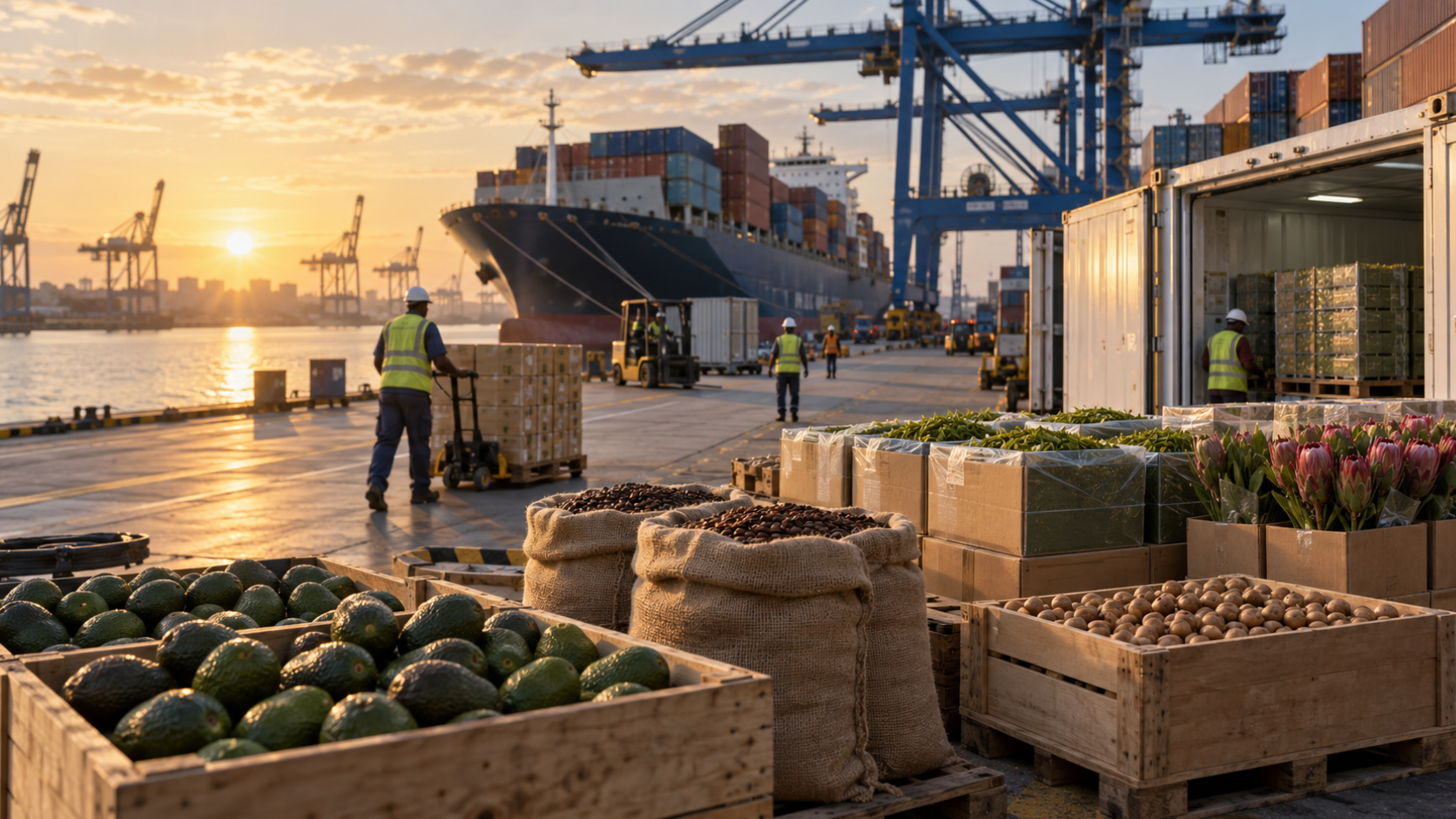
A Kenyan exporter may secure an initial order for coffee, tea, avocado, macadamia or flowers. Retaining the buyer requires predictable volumes, consistent quality and reliable delivery.
Kenya’s fragmented agricultural production can make this difficult. Small-scale farmers often produce through disconnected value chains, while processors and exporters face high energy, transport and financing costs.
Duty-free access improves the price of a product at the border. It does not reduce the cost of collecting produce from farms, processing it, maintaining a cold chain or transporting it to China.
Without investment in these capabilities, the agreement may generate individual export successes without materially changing the overall trade balance.
Kenya exports too little value
The composition of trade also matters.
China sells Kenya machinery, electronics, vehicles, textiles, plastics and other manufactured products. Kenya’s exports are more concentrated in agricultural commodities, minerals and other relatively low-value goods.
This creates a structural imbalance. Manufactured imports can command higher values and serve multiple sectors of the economy, while commodity exports are often exposed to volatile prices and limited margins.
Kenya will struggle to narrow the gap if it simply exports larger quantities of raw or minimally processed goods.
The greater opportunity lies in selling processed food, branded consumer products, specialty agricultural goods and manufactured inputs. That would allow more of the product’s value to be created and retained in Kenya.
Export readiness must follow the agreement
Kenya and China have already flagged off an initial shipment of agricultural produce under the zero-tariff arrangement. The more important test is whether such shipments become routine.
Government support should now move from negotiating access to building export readiness.
That means helping producers understand Chinese standards, financing certification and processing facilities, improving cold-chain infrastructure and connecting exporters with dependable buyers.
It also requires clarity on which products have the strongest commercial prospects. Treating all eligible exports as equally promising could spread resources too thinly.
Kenya may achieve better results by concentrating support on a limited number of products where it already has quality, supply or branding advantages.
The deficit will not disappear quickly
The trade imbalance is unlikely to be eliminated, nor would that necessarily be a realistic objective.
Many Chinese imports are machinery, equipment and intermediate goods used by Kenyan consumers and businesses. Imports can support economic activity when they expand productive capacity.
The policy question is not whether Kenya should stop buying from China. It is whether the country can use improved market access to build more competitive export industries and generate additional foreign-exchange earnings.
The agreement creates a larger opportunity for Kenyan exporters. Whether they capture it will depend on decisions made inside Kenya: how products are financed, processed, certified, transported and marketed.
China has lowered the barrier at its border. Kenya must now strengthen everything that happens before its goods get there.