


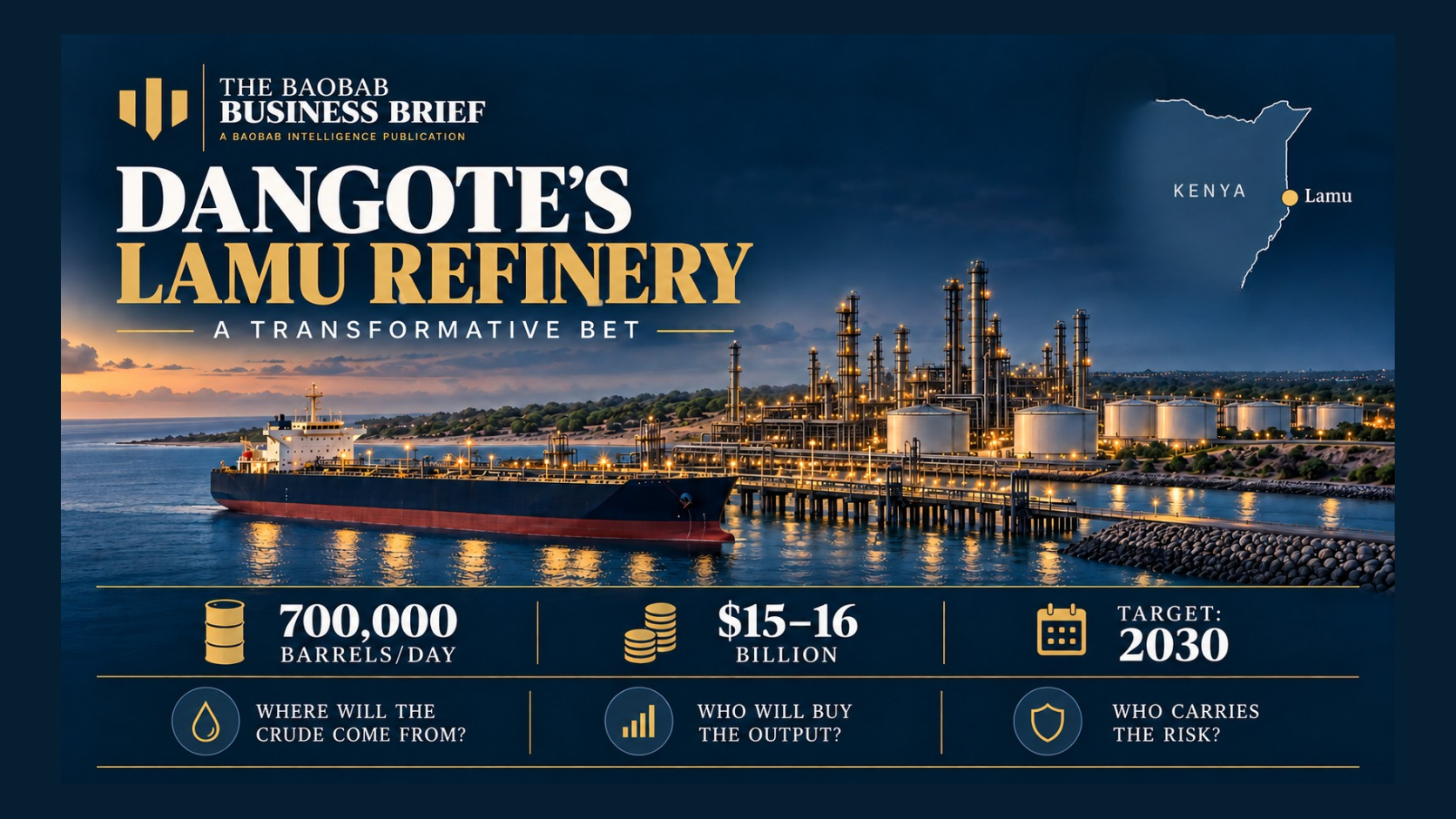

Aliko Dangote plans to build a $15–16 billion oil refinery in Lamu capable of processing 700,000 barrels per day. Groundbreaking is scheduled for September 30, with completion targeted for 2030.
If delivered, it would be one of East Africa’s largest industrial projects. It could reduce dependence on imported fuel, strengthen Lamu Port and position Kenya as a regional petroleum hub.
But the refinery’s scale is also its biggest risk.
Kenya does not currently produce crude oil commercially. Uganda is developing its petroleum industry, while South Sudan has reserves but faces infrastructure and geopolitical constraints. Neither can yet guarantee the volume and reliability a refinery of this size would require.
That leaves imported crude arriving by sea. Lamu’s deep-water port makes this possible, but it also means the refinery would remain exposed to global oil prices, shipping disruptions and exchange-rate movements. Kenya could replace imported fuel with imported crude without fully escaping the vulnerabilities it is trying to solve.
Financing is another test. Dangote Group intends to use internal cash, bonds and a possible public listing, but the company is simultaneously pursuing other major energy investments. The refinery must also be supported by storage terminals, pipelines, roads and export infrastructure that remain underdeveloped within the LAPSSET corridor.
The project’s economics will therefore depend on more than Kenyan demand. A 700,000-barrel-per-day facility needs a credible regional market, coordinated fuel standards and dependable access to neighbouring countries.
There is also the question of public exposure. If Kenya or other governments take equity stakes, taxpayers could share both the returns and the risks.
The Baobab View
The Dangote refinery could transform Lamu and strengthen East Africa’s energy security. But a groundbreaking ceremony is not proof of commercial viability.
Before celebrating the headline investment, Kenya should demand clarity on three things: where the crude will come from, who will buy the output and how much financial risk the public will carry.
The refinery’s promise is enormous. So is the cost of getting the assumptions wrong.


